
Sometimes Summer Makes The Truth Harder To Ignore
And Then It Gets Loud

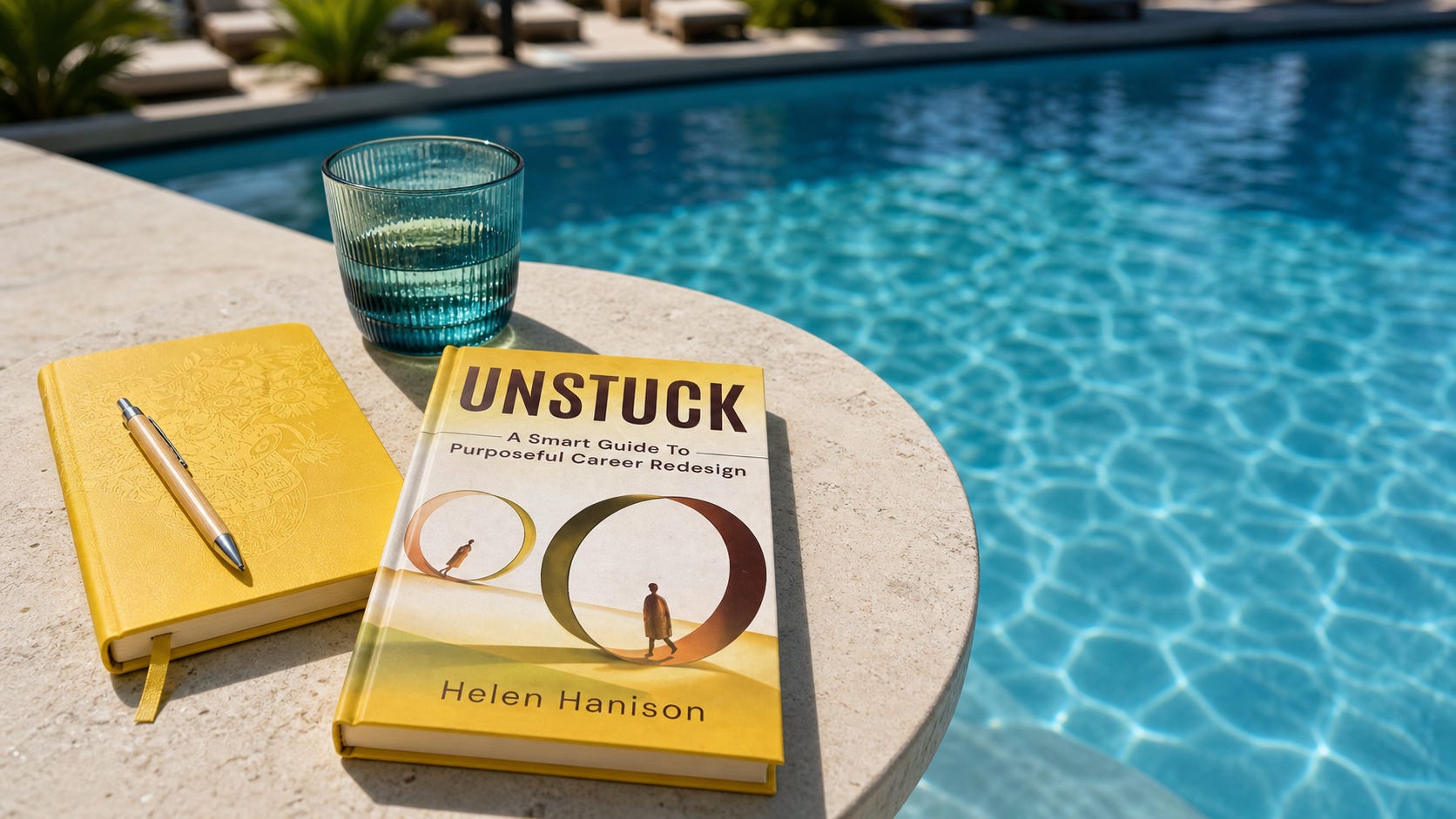
There’s a particular kind of truth that only becomes audible when life gets quieter.
And then it gets oddly loud.
It’s not the lightning-bolt realisation that arrives with perfect clarity and rearranges everything by sunset.
It’s slower than that.
But insistent.
And if you’re very honest, horribly familiar.
A thought that keeps returning, in bigger font.
A heaviness you notice on holiday, when you expected to feel sun-soaked and shimmery.
A dread about going back into your real world again.
A quiet sense that something was working, technically, but it wasn’t fine after all.
I’ve been thinking about this as summer arrives.
Because summer can make us imagine we’re supposed to feel happier. Lighter. Grateful. Switched off enough to come back in better energy.
Sometimes we do. And that’s lovely.
But sometimes summer does something much more interesting.
It removes the distractions that were helping you avoid a difficult truth.
It interrupts our ability to keep performing okayness.
The ordinary scaffolding drops away for just long enough that we can hear what’s been trying to get our attention for months.
Sometimes years.
And suddenly, a thought you’ve been outrunning catches up with you.
That’s not comfortable.
But it can be clarifying.
I remember working with someone approaching last summer, who had done everything just right.
Which is often where this kind of story begins.
She’d become indispensable.
That safest pair of hands.
Certainly the go-to person for institutional knowledge.
The one who could hold complexity, absorb pressure, and keep the whole team moving.
She was trusted.
Respected.
Relied on.
And repeatedly overlooked.
Not because she lacked ability. Almost the opposite.
She’d become so useful where she was that people struggled to imagine her anywhere else.
Well-recognised, but that’s not the same as being met.
Sometimes being valued merely means people have learned where to keep you.
For a long time, she’d explained it away.
Timing.
Politics.
Another restructure.
A promotion that so nearly happened.
A leader who said the right things but changed nothing material.
Nothing quite made her unhappy enough to trigger movement.
But enough had accumulated to make staying feel costly.
Then came July.
She went on holiday, and told me it happened while looking out at the sea, with the kind of space she’d been telling herself she needed.
But what surfaced wasn’t relaxation.
It was dread.
Not a vague Sunday-night feeling that could be pushed away ... again.
Something more precise.
And more powerful.
The body knowing before the mind was ready to say it out loud:
*I cannot keep returning to this version of my life.*
That kind of knowing can feel inconvenient. Disloyal.
Even scary.
Especially when nothing is visibly broken.
You can be doing well.
You can be needed.
You can be competent and credible and externally successful.
And still be quietly losing contact with yourself inside the role you’ve become so good at performing. And now you’ve seen that for what it is.
This is one of the reasons I’ve always been wary of making happiness the main question.
Not because happiness is unimportant.
Of course it matters.
But “Am I happy?” can be strangely difficult to answer when you’re high-functioning inside something that is misaligned.
If there’s no obvious crisis, there may be nothing to objectively justify the scale of your discomfort.
So you minimise it.
You tell yourself other people have it harder.
You remind yourself of the good bits.
You wait for the feeling to pass.
You keep functioning.
But you do know how that feels on the inside.
And a more useful question might be:
What is this discomfort trying to tell me?
Or perhaps:
How much of my life requires me to perform a version of myself I’ve outgrown?
In the introduction to Unstuck, I wrote about the difference between happiness and meaningfulness because the distinction had stayed with me for years.
Happiness can be a high spike.
Lovely, but also temporary.
Meaning is more like a thread.
It can hold through difficulty, uncertainty, effort, and change because it connects us to something that matters beyond the immediate moment.
That distinction feels even more important to me now.
Because many of the people I work with aren’t simply trying to become a bit happier at work.
They’re trying to recover a sense of aliveness.
They’re trying to understand why successes feel oddly flat.
Why being needed has started to feel a lot like being trapped.
Why the life they worked so hard to build no longer seems to reflect who they’re becoming.
Or even want to be.
And often, the first signal isn’t a confident desire for change.
It’s discomfort.
Anticlimax.
Restlessness.
Resentment.
Dread.
Envy.
Fatigue that doesn’t improve after rest.
None of these feelings are especially tidy.
But they are information.
Not instructions, necessarily.
You don’t have to desert your status quo because a feeling has arrived.
You don’t have to resign, reinvent, announce a pivot, or turn your whole life into a project by the time you’re on the plane home.
But you do have to stop dismissing the signal simply because it’s inconvenient.
It won’t get more convenient later.
That was certainly the beginning for my lovely client.
No dramatic leaps into the unknown.
Not a reckless exit in sight.
A reorientation.
She began by naming what had become true last summer.
Acknowledged that she was tired of being trusted with responsibility but not stretched towards her potential.
That her loyalty had become part of a sticky system keeping her in situ.
That her competence had made her useful in ways that were no longer reciprocal.
And that the dread she felt by the sea wasn’t weakness, ingratitude, or a failure of resilience.
It was a message from the part of her that still wanted a life with more authorship in it.
From there, things became more practical.
She collected conversations.
She tested possibilities.
She began creating conditions that would allow her to move without leaving chaos behind.
But the first work wasn’t strategic.
It was psychological. It was something I call the act of alignment.
She had to believe the signal mattered.
The scaffolding had fallen away, and she decided she’d become the architect of her own congruent choices.
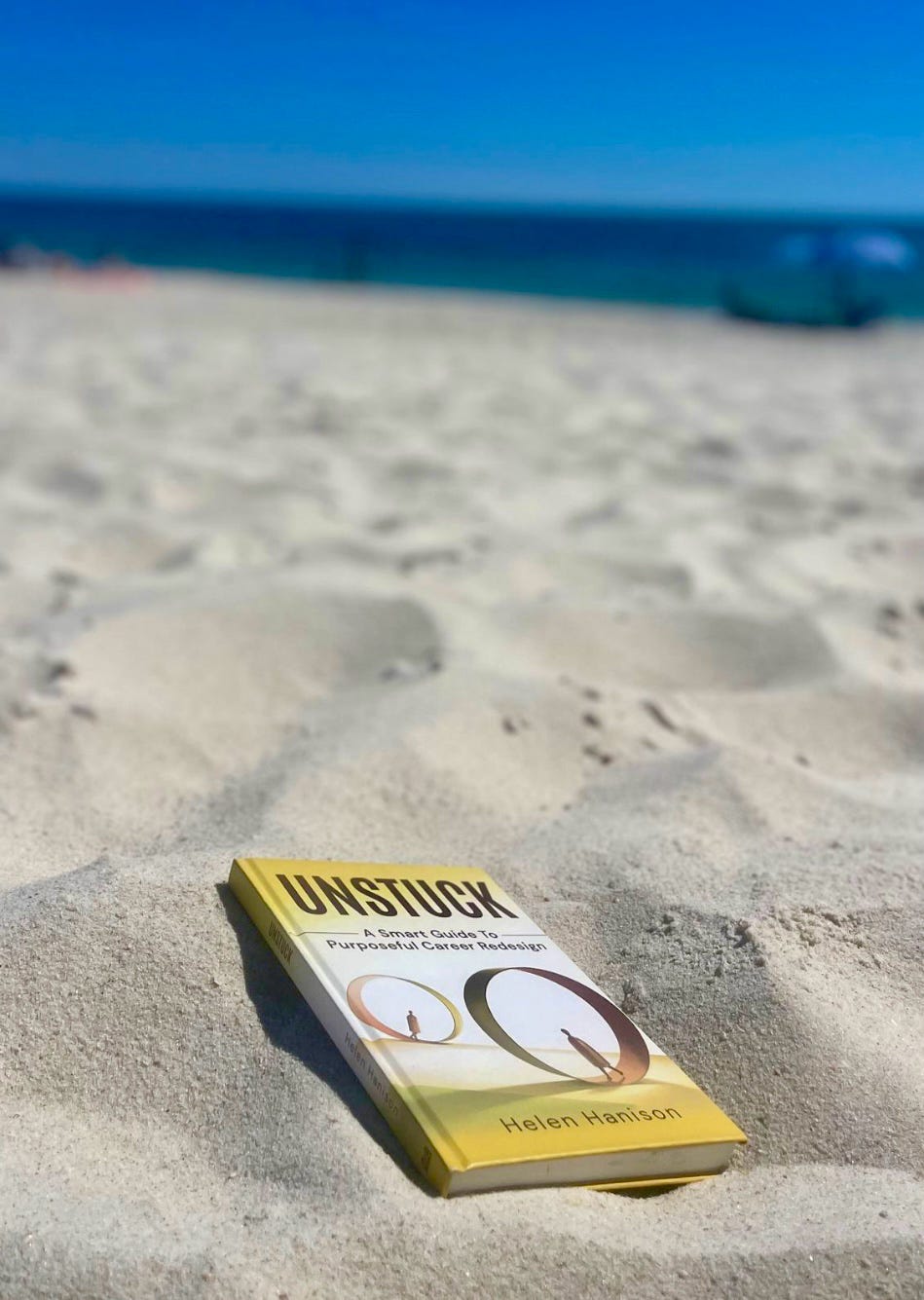
This summer, I’m returning to some of the questions at the heart of Unstuck.
Not because summer needs to become an annual self-improvement project.
Quite the opposite.
Because the slower months can offer a different kind of permission.
Permission to notice.
Permission to stop mistaking endurance for alignment.
Permission to ask whether the life you’re functioning inside still feels meaningfully yours.
Not everything that feels off needs immediate action.
But some things do need honest attention.
So perhaps this is the first purposeful pause:
What becomes easier to hear when life gets quieter?
And if something in you has been trying to get your attention for a while, what would it mean to listen without rushing to fix it?
Across the summer, I’ll be writing from the questions at the heart of Unstuck: what no longer fits, what still feels alive, and what kind of next chapter might be quietly asking to be shaped.
Not as a campaign. As a way of rethinking slowly, purposefully, and with enough space to notice what may already be true.
If you’d like to read or listen along this summer, and apply the thinking to yourself, Unstuck is there as companionable summer reading.
Not homework. Definitely not another thing to optimise. Just a place to pause with the questions and see what they stir.